
If you struggle with racing thoughts, difficulty concentrating, restlessness, or constantly feeling overwhelmed, you may wonder whether anxiety or ADHD is behind what you’re experiencing. The two conditions share several symptoms, which can make it difficult to understand what is actually happening. For individuals and families throughout Salem, Austintown, Alliance, and surrounding Eastern Ohio communities, understanding the differences between ADHD and anxiety can be an important first step toward finding the right support.
Although ADHD and anxiety are different conditions, they can affect many of the same areas of daily life. Both can interfere with work, school, relationships, and everyday responsibilities. In some cases, a person may experience both conditions at the same time. Understanding how these conditions differ can help you recognize what you may be experiencing and when it might be helpful to talk with a mental health professional.
What Is the Difference Between ADHD and Anxiety?
Attention-deficit/hyperactivity disorder (ADHD) is a neurodevelopmental condition that affects attention, impulse control, and activity levels. People with ADHD may have difficulty staying organized, managing time, following through on tasks, or controlling impulsive behaviors. Symptoms begin during childhood, although some individuals are not diagnosed until adulthood because their struggles may not have been recognized earlier.
Anxiety, on the other hand, involves persistent worry, fear, or feelings of nervousness that can interfere with everyday life. While occasional anxiety is a normal response to stress, an anxiety disorder involves symptoms that are more frequent, intense, or difficult to manage.
One of the biggest differences between ADHD and anxiety is what may be driving the symptoms. Someone with ADHD may struggle to finish a task because they become distracted, lose track of time, or have difficulty organizing their thoughts. Someone experiencing anxiety may struggle to finish that same task because they are worried about making a mistake, concerned about the outcome, or overwhelmed by the possibility of something going wrong. From the outside, these situations can look very similar, but the underlying reasons may be different.
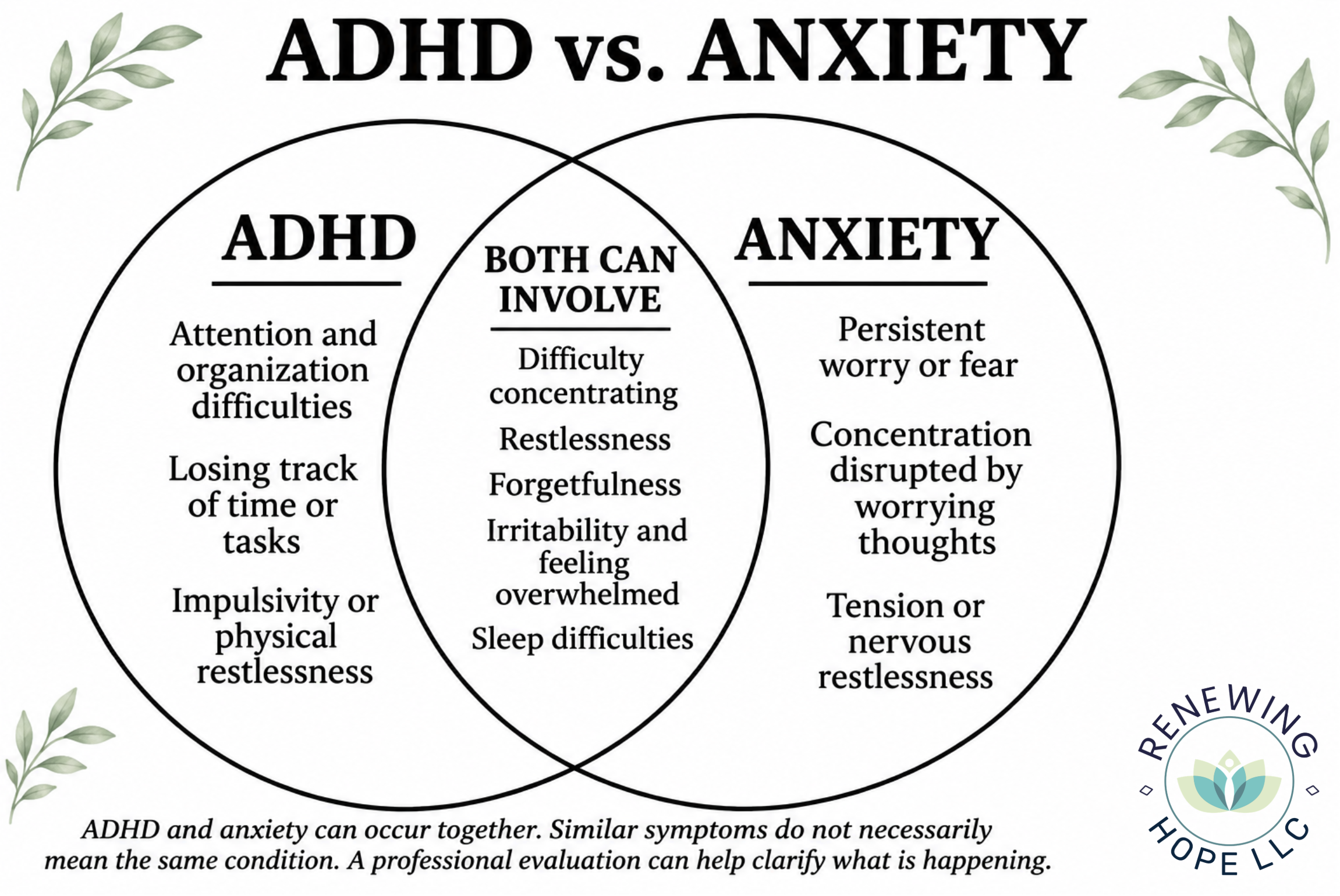
Symptoms of ADHD and Anxiety That Can Overlap
ADHD and anxiety share several symptoms, which is one reason people sometimes have difficulty distinguishing between them. Difficulty concentrating is a common example. Someone with ADHD may find their attention shifting frequently, even when they are trying to focus on something important. They may start several tasks without finishing them or become distracted by things happening around them. Someone with anxiety may also have trouble concentrating, but their attention may be consumed by worrying thoughts. They might repeatedly think about an upcoming appointment, a conversation they had earlier, or something that could go wrong in the future.
Restlessness is another overlapping symptom. People with ADHD may feel physically restless, have difficulty sitting still, or constantly feel the need to move. Individuals experiencing anxiety may feel restless because of nervous energy, physical tension, or an ongoing sense that something is wrong. Both conditions can also contribute to irritability, forgetfulness, sleep difficulties, and feeling overwhelmed.
For example, someone who frequently forgets appointments may be dealing with difficulties related to attention and organization. Another person may forget appointments because they are distracted by persistent worries or having trouble sleeping due to anxiety. These differences are important because symptoms alone do not always tell the whole story. Looking at when symptoms started, how frequently they occur, and how they affect everyday responsibilities can help a professional better understand what someone is experiencing.
Can You Have ADHD and Anxiety at the Same Time?
Yes. ADHD and anxiety can occur together, and having one condition does not mean someone cannot experience the other. In fact, living with untreated or unrecognized ADHD can sometimes contribute to anxiety. Someone who regularly struggles to meet deadlines, remember responsibilities, or keep up with everyday tasks may begin worrying about falling behind or disappointing others. Over time, these experiences can create additional stress and affect their confidence.
For example, an adult with ADHD may consistently struggle with organization at work. They might forget important details, underestimate how long assignments will take, or have difficulty keeping track of multiple responsibilities. After experiencing these challenges repeatedly, they may begin feeling anxious about making mistakes or losing their job. Children can experience similar challenges. A child who struggles to pay attention in school may become frustrated with homework, worry about disappointing their parents, or feel anxious about falling behind classmates.
It is also possible for anxiety to make existing ADHD symptoms more difficult to manage. When someone is constantly worried or overwhelmed, concentrating, making decisions, and completing tasks can become even harder. This is why it is important not to assume that every symptom is caused by one condition. Understanding whether ADHD, anxiety, or both may be contributing to someone’s struggles can help determine what type of support may be most helpful.
If you are interested in learning more about how ADHD can affect everyday life, our article on ADHD symptoms in adults, including signs that may have been overlooked, explores some of the challenges adults experience and what steps they can take next.

When Should You Consider Seeking Professional Help?
It is normal to feel distracted, nervous, or overwhelmed from time to time. However, when these experiences become frequent and begin interfering with everyday life, it may be worth exploring additional support. You may want to consider talking with a mental health professional if you regularly struggle to concentrate, feel overwhelmed by responsibilities, have difficulty managing emotions, or find that worry is interfering with your relationships, work, or school. Parents may also consider seeking guidance if their child consistently struggles with attention, impulsive behavior, emotional regulation, or school-related responsibilities.
Not every difficulty with concentration or persistent worry means someone has ADHD or an anxiety disorder. A professional evaluation considers more than individual symptoms. For ADHD, providers may look at when symptoms began, how long they have been present, situations where they occur, and how they affect everyday functioning. ADHD symptoms must have been present during childhood, even if the condition was not recognized or diagnosed until adulthood. Evaluating anxiety also involves understanding the frequency, intensity, and impact of symptoms, along with other factors that may contribute to someone’s experiences.
Understanding the underlying concerns is important because treatment recommendations may look different depending on what someone is experiencing. Counseling can help individuals navigate anxiety, emotional overwhelm, and the everyday challenges that sometimes accompany ADHD. Therapy may provide an opportunity to better understand patterns of behavior, develop coping strategies, improve communication, and work through situations that contribute to stress. Depending on individual needs, treatment may also involve behavioral strategies, an ADHD evaluation, or medication management through an appropriate medical provider.
For individuals experiencing anxiety, treatment may focus on understanding triggers, recognizing unhelpful thought patterns, and learning practical ways to manage worry. Our article on anxiety therapy and what treatment actually looks like week to week explains what individuals can expect when beginning counseling.
Finding Mental Health Support in Salem, Austintown, and Alliance, Ohio
Trying to understand whether you are experiencing ADHD, anxiety, or both can feel frustrating, especially when symptoms begin affecting multiple areas of your life. You may know something feels difficult, but not understand why certain responsibilities seem harder to manage than they should. Individuals and families throughout Salem, Austintown, Alliance, and surrounding Mahoning, Columbiana, and Stark County communities may have questions about where to turn when these challenges begin affecting everyday life.
You do not have to figure everything out on your own. Renewing Hope LLC provides mental health counseling and behavioral health support to individuals and families throughout Eastern Ohio. Our approach focuses on understanding each person’s circumstances and helping them navigate the challenges affecting their emotional and mental well-being. Whether you are an adult struggling with concentration and persistent worry, a parent concerned about your child’s behavior, or someone trying to better understand your mental health, reaching out for guidance can be a practical first step.
ADHD and anxiety are not character flaws, and struggling with everyday responsibilities does not mean you are failing. Both conditions can affect how people think, feel, and respond to situations. With the right understanding and appropriate support, it is possible to develop healthier ways to manage those challenges. If you have questions about counseling or available behavioral health services, learn more about Renewing Hope’s counseling services or contact Renewing Hope LLC to learn more about getting started.