
Anxiety Therapy: What Treatment Actually Looks Like Week to Week
If you struggle with constant worry, racing thoughts, or the feeling that something could go wrong at any moment, you may have wondered whether anxiety therapy could help. Throughout Salem, Austintown, Alliance, and surrounding Eastern Ohio communities, anxiety can affect everyday life in ways others may not recognize. It can make it difficult to sleep, concentrate at work, manage relationships, or relax even when nothing seems wrong.
One common question people have about anxiety counseling is what actually happens during treatment. Will you spend every session talking about your worries? How long does it take to notice a difference? And what if you do not know where your anxiety comes from?
Anxiety therapy helps you understand your symptoms, recognize patterns, and develop practical ways to manage anxious thoughts and feelings. At Renewing Hope LLC, counseling offers an opportunity to work through these concerns with professional support at a pace that fits your needs.

What Happens During the First Few Weeks of Anxiety Therapy?
Starting therapy can feel uncomfortable, especially if you are used to handling problems on your own. You may not know what to say or whether your concerns are serious enough to discuss with a counselor. You do not need to have everything figured out before your first appointment.
During the first few sessions, your therapist will work with you to understand what you have been experiencing. This may include discussing situations that trigger anxiety, how often you feel overwhelmed, and whether your symptoms affect your sleep, relationships, work, or daily responsibilities.
You might discuss physical symptoms such as a racing heart, muscle tension, restlessness, or difficulty sleeping. You may also explore patterns such as overthinking conversations, anticipating worst-case scenarios, or avoiding situations that make you uncomfortable.
These conversations help you and your therapist identify treatment goals. You might want to feel more comfortable in social situations, manage stress at work, or spend less time worrying about things outside your control. The first few weeks are about understanding your anxiety and deciding what you want to work on, not solving everything immediately.
What Does a Typical Anxiety Therapy Session Look Like?
Once you and your therapist establish treatment goals, sessions may focus on understanding your thought patterns and practicing different ways to respond to anxiety.
A session might begin with a conversation about what has happened since your previous appointment. Your therapist may ask about stressful situations, how you responded, and what helped or made things more difficult.
For example, you might spend hours worrying about an upcoming conversation with a family member. You may replay previous disagreements or imagine everything that could go wrong. Your therapist can help you recognize the thoughts contributing to your anxiety and consider whether those thoughts reflect what is likely to happen or what you fear might happen.
Depending on your needs, therapy may also involve learning coping strategies, recognizing physical signs of stress, or gradually approaching situations you have been avoiding.
Some sessions focus on talking through experiences and identifying patterns. Others may involve practicing skills or planning how to approach a challenging situation. You will not necessarily leave every appointment feeling completely relaxed. The goal is to develop skills you can use outside the counseling office, where anxiety often affects everyday life.
How Anxiety Therapy Changes From Week to Week
Anxiety treatment is not a fixed program. Your progress depends on your symptoms, personal circumstances, treatment goals, and the approach you and your therapist use.
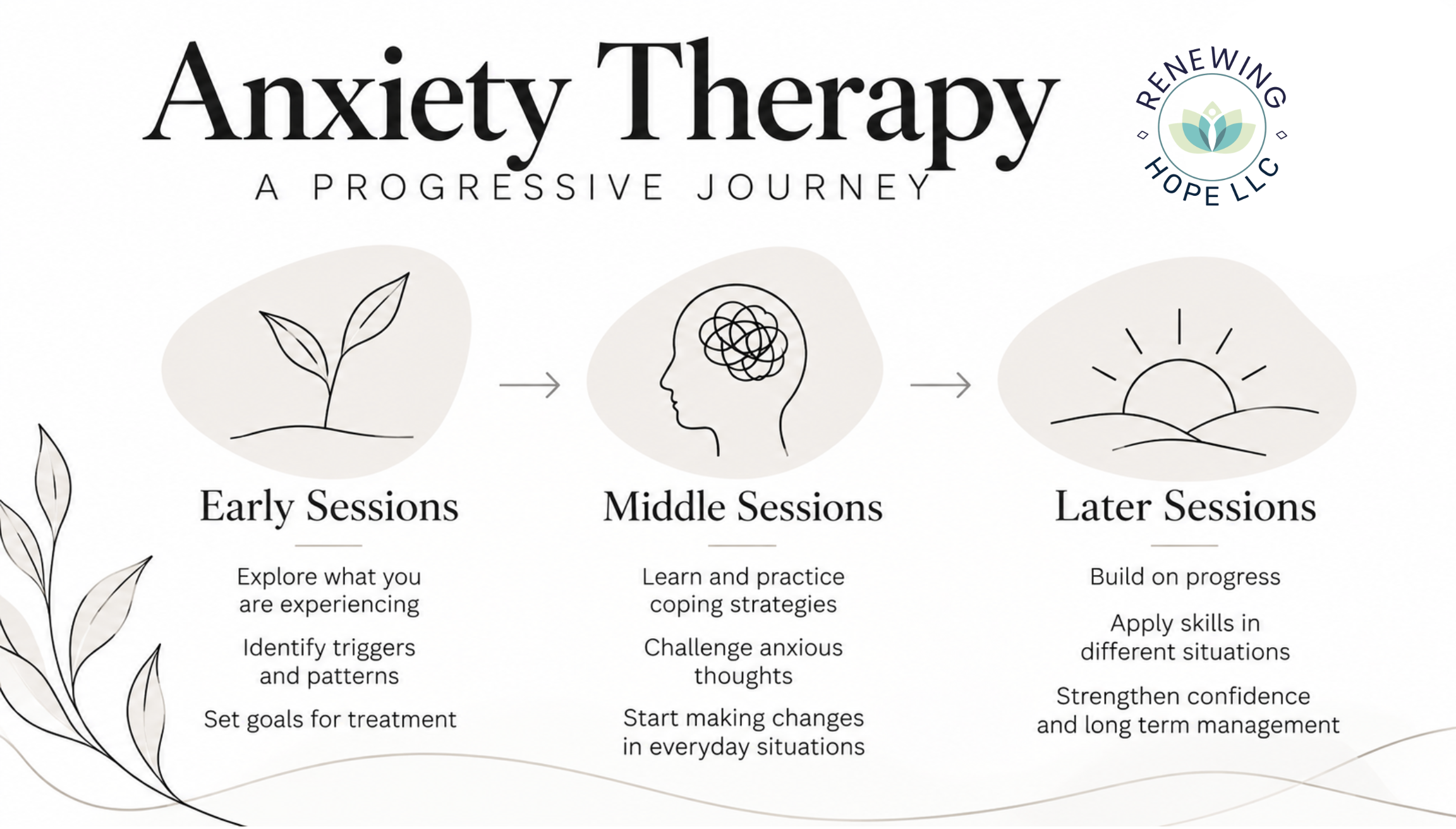
Early sessions focus on understanding your anxiety. You may begin recognizing connections between stressful situations, your thoughts, physical reactions, and behaviors. For example, you might realize that repeatedly checking your work comes from a fear of making mistakes or that avoiding social events provides temporary relief but leaves you feeling isolated. Recognizing these patterns helps you understand what you want to change.
Middle sessions often focus on practicing coping skills. Depending on your treatment plan, you may learn to question anxious thoughts, manage physical tension, tolerate uncertainty, or approach situations you have been avoiding.
Imagine you become anxious when a family member does not answer your phone call. Your mind immediately jumps to the worst-case scenario, making it difficult to concentrate. Therapy can help you recognize that reaction, examine the assumptions behind it, and practice managing uncertainty without becoming caught in a cycle of worry.
You may also practice skills between appointments by noticing anxious thoughts, trying a strategy during a stressful situation, or reflecting on how you responded. Applying these skills in everyday life can help you understand what works for you.
Later sessions may focus on maintaining progress. As you build confidence in your skills, therapy may help you apply them to different situations. You might notice that you recover more quickly after stressful events, make decisions with less hesitation, or spend less time replaying conversations.
Anxiety may still occur, but it can become easier to manage. There is no universal timeline for these changes. Some people notice improvements relatively early, while others need more time. Progress is best measured against your own goals rather than someone else’s experience.
What If Anxiety Does Not Improve Right Away?
When you decide to seek help, it is understandable to want relief quickly. However, progress is not always straightforward. You may have a good week followed by a difficult one, particularly when dealing with family conflict, financial concerns, work stress, or unexpected changes.
A difficult week does not automatically mean therapy is not working. You may become more aware of your anxiety before you become more comfortable managing it. You might start noticing patterns you previously overlooked or recognize how much energy you spend trying to prevent things from going wrong.
If you feel stuck, talk with your therapist. You can discuss what seems helpful, what is not working, and whether your treatment approach needs to change. Your feedback is an important part of the process.
Anxiety also affects people differently. The approach that helps one person may not be the right fit for another. Depending on your symptoms and circumstances, counseling may be one part of a broader treatment plan that includes support from a medical provider.
Understanding what you are experiencing can be a helpful starting point. Read our related article on understanding the symptoms of anxiety and depression in Eastern Ohio to learn more about how these conditions can affect everyday life.
Finding Anxiety Counseling in Salem, Austintown, and Alliance, Ohio
Living with anxiety can make even small decisions feel exhausting. You may spend so much time managing worry that reaching out for help becomes another task you put off. You might also wonder whether your symptoms are serious enough to deserve attention.
You do not have to wait until anxiety becomes unmanageable to seek support.
For individuals and families in Salem, Austintown, Alliance, and surrounding Eastern Ohio communities, Renewing Hope LLC provides counseling services to help people navigate mental health challenges and everyday concerns. Counseling offers a place to discuss what you are experiencing, better understand your symptoms, and work toward realistic treatment goals.
If anxiety is affecting your relationships, work, sleep, or daily activities, consider exploring our counseling services. You can also contact Renewing Hope to ask questions about getting started and learn more about available services.
You do not need to know exactly what to say during your first appointment or have a clear explanation for every worry. Those are things you can begin exploring with a counselor.
Anxiety may not disappear overnight, but you can learn to understand it and respond to it differently. With appropriate support and practice, everyday challenges can become more manageable. Seeking anxiety therapy is a practical step toward getting help with something that has become difficult to handle alone.