
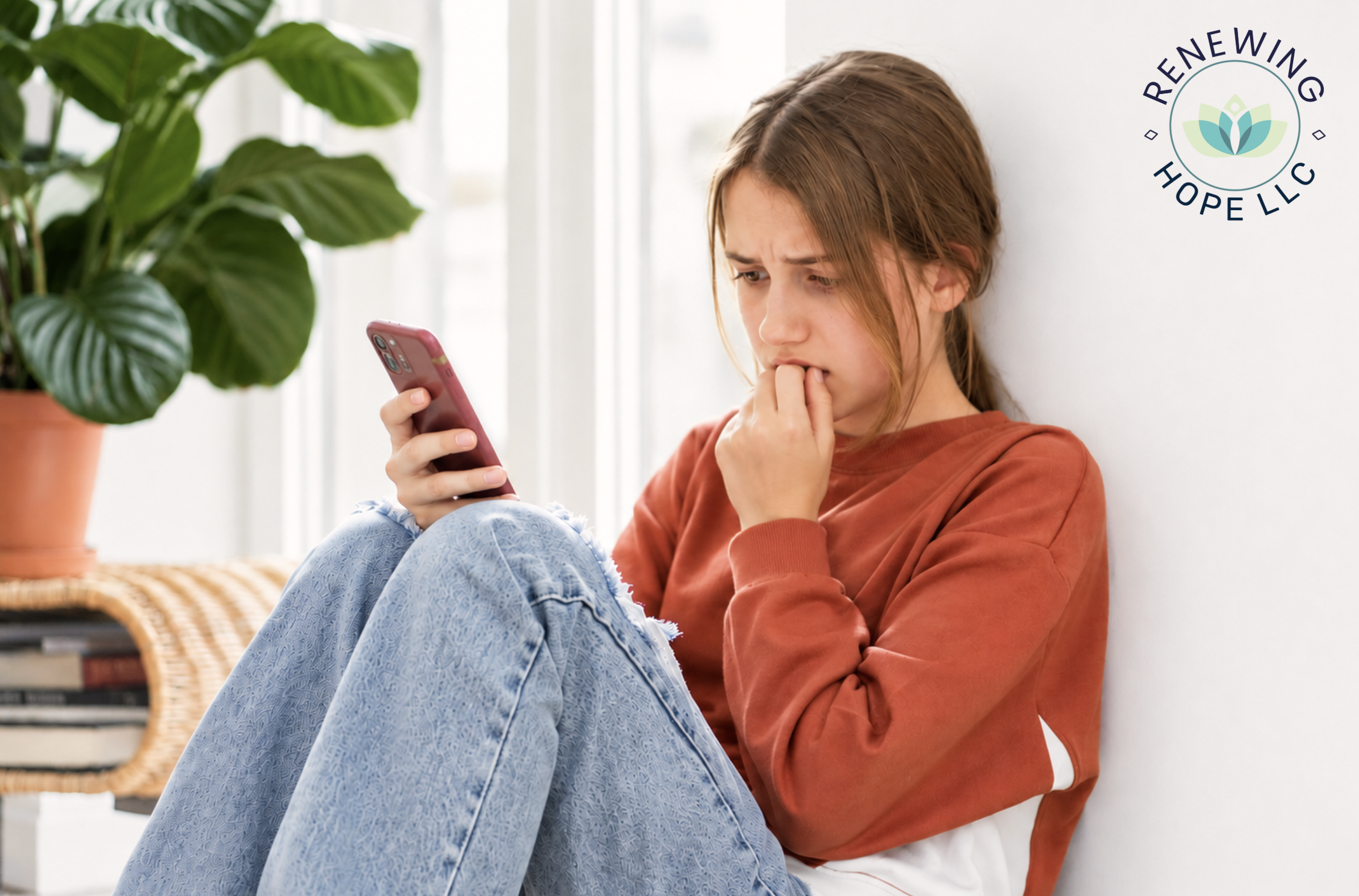
Have you ever found yourself worrying that someone you care about is losing interest, overthinking a short text message, or feeling anxious when someone doesn’t respond right away? Maybe you need frequent reassurance that everything is okay in your relationship, but even after hearing it, the worry eventually returns. If these experiences sound familiar, you may have an anxious attachment style.
Anxious attachment can affect how you communicate, handle conflict, and feel about yourself in relationships. It can show up in romantic relationships, friendships, and family connections. For individuals throughout Salem, Austintown, Alliance, and surrounding Eastern Ohio communities, understanding these patterns can be an important first step toward building healthier relationships.
The good news is that attachment patterns are not permanent. With the right support, you can learn to recognize your emotional responses, understand where they come from, and develop healthier ways of connecting with others.
What Is an Anxious Attachment Style?
An anxious attachment style is a relationship pattern commonly associated with a strong fear of rejection, abandonment, or losing someone’s affection. People with anxious attachment may feel especially sensitive to changes in communication, emotional distance, or uncertainty in their relationships.
For example, a delayed response to a text message might lead to thoughts that someone is upset, losing interest, or intentionally avoiding them. A disagreement may feel much bigger than the situation itself because it creates uncertainty about whether the relationship is still secure.
These reactions are often connected to how a person has learned to understand relationships, emotional safety, and connection. Attachment styles frequently begin developing during childhood based on experiences with caregivers and other important relationships. When emotional support or attention feels inconsistent, a child may become especially alert to signs that someone might withdraw their affection or support.
However, anxious attachment is not limited to childhood experiences. Past relationships, rejection, trauma, and other difficult life circumstances can also influence how someone approaches emotional connections.
Having an anxious attachment style does not mean something is wrong with you. It means you may have developed ways of responding to relationships that once helped you feel safe but may now be creating challenges.
Common Signs of Anxious Attachment in Relationships
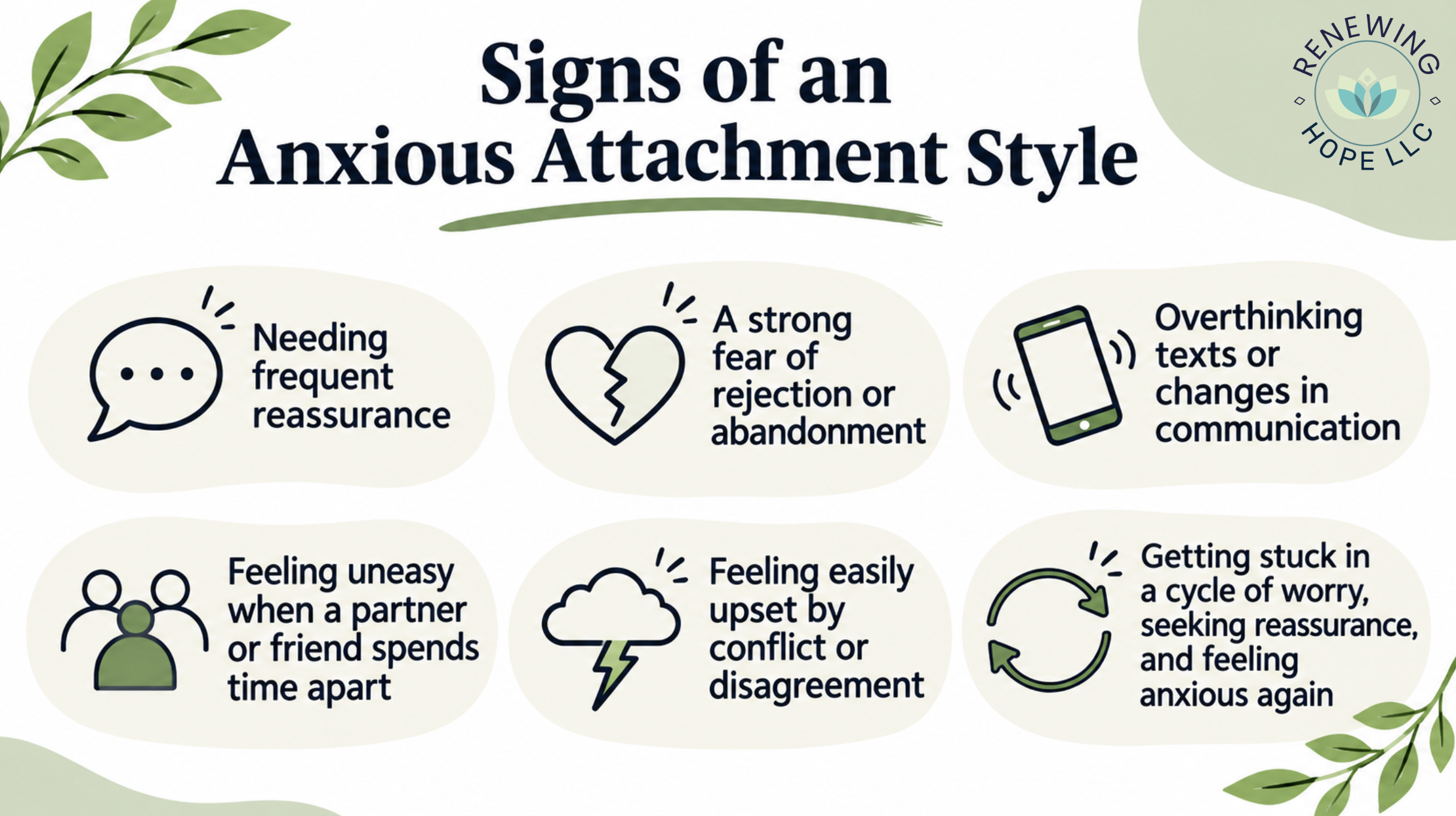
Anxious attachment does not look exactly the same for everyone, but certain patterns are common. One is needing frequent reassurance. You may find yourself asking whether someone is upset with you, whether they still care, or whether everything is okay between you. Even when the other person provides reassurance, the relief may only last a short time before the worry returns.
Overthinking communication is another common experience. You might reread text messages, analyze someone’s tone, or spend time wondering whether something you said was taken the wrong way. Small changes in someone’s behavior can feel like signs that something is wrong.
People with anxious attachment may also struggle with independence within relationships. You might feel uncomfortable when your partner makes plans without you, when a close friend becomes less available, or when someone needs time alone. Even normal periods of separation can bring up feelings of insecurity.
Conflict can be particularly difficult. Rather than viewing an argument as a disagreement that can be worked through, you may immediately worry that the relationship is ending. This fear can lead to repeatedly apologizing, avoiding difficult conversations, or trying to resolve disagreements before either person has time to process what happened.
These experiences can create a repeating cycle: you feel anxious, seek reassurance, experience temporary relief, and then begin worrying again when another situation triggers those same feelings. Over time, this cycle can become exhausting for you and the people around you.
How Anxious Attachment Can Affect Your Relationships
An anxious attachment style can make it difficult to feel secure, even when you are in a healthy and supportive relationship. You may constantly look for signs that something is changing or that someone is pulling away, making it difficult to enjoy positive moments without worrying about what could go wrong.
In romantic relationships, this may lead to frequent misunderstandings, disagreements about communication, or feeling like you need more emotional reassurance than your partner understands. Your partner may not recognize why certain situations trigger strong reactions, while you may struggle to explain why those situations feel so upsetting.
Anxious attachment can also affect friendships and family relationships. You might feel hurt when someone cancels plans, takes longer to respond, or spends time with other people. Even when there is a reasonable explanation, the situation may bring up feelings of rejection.
It can also affect your relationship with yourself. When much of your emotional energy goes toward maintaining connections with other people, your own needs, interests, and boundaries can become less of a priority. You may agree to things you are uncomfortable with or avoid expressing your opinions because you worry about creating distance.
Understanding these patterns is not about blaming yourself or someone else. It gives you an opportunity to recognize what is happening and begin making changes.
How Therapy Can Help You Develop a More Secure Attachment Style
Changing long-standing relationship patterns can be difficult, especially when emotional reactions happen before you have time to think through them. Therapy provides a place to explore these experiences, understand underlying fears, and practice healthier ways of responding.
Attachment-based therapy focuses on understanding how early relationships and past experiences influence the way you connect with others today. Rather than simply addressing individual disagreements, this approach helps you recognize the deeper emotional patterns that may be contributing to relationship challenges.
For someone with anxious attachment, counseling may begin by identifying situations that trigger feelings of insecurity. You might explore where fears of rejection developed, why certain interactions create anxiety, and how past experiences influence the way you interpret situations today.
You can also work on recognizing the difference between an emotional fear and what is actually happening in the present moment. For example, a partner needing time alone does not automatically mean they are losing interest. Learning to recognize that distinction can help you avoid reacting to situations based entirely on fear.
Therapy can also help you develop practical skills for managing emotional responses. This may include learning how to calm yourself when anxiety increases, tolerate uncertainty, communicate your feelings more clearly, and establish healthier boundaries. Instead of repeatedly seeking reassurance or agreeing to everything to avoid conflict, you can develop confidence in your own needs and decisions.
At Renewing Hope LLC’s counseling services, individuals can receive support for emotional and relationship challenges that affect everyday life. Counseling provides an opportunity to better understand personal struggles, work through difficult experiences, and develop practical ways to improve emotional well-being.
For individuals in Salem, Austintown, Alliance, and surrounding Eastern Ohio communities, local mental health counseling can make it easier to take that first step. You do not have to wait until a relationship reaches a breaking point to seek support.

Building Healthier Relationships Starts With Understanding Yourself
Developing a more secure attachment style does not mean you will never feel anxious, need reassurance, or worry about a relationship again. Those feelings are part of being human. The difference is learning how to respond to them without allowing them to control your decisions or relationships.
You can begin by paying attention to situations that trigger your anxiety. Notice what happens before you feel overwhelmed, what thoughts come up, and how you typically respond. Recognizing a familiar pattern can create an opportunity to pause and choose a different response.
It also helps to practice communicating your needs directly rather than expecting others to recognize when something is wrong. Healthy relationships allow room for independence, disagreements, and individual needs without making either person feel that the connection is constantly at risk.
Most importantly, remember that changing attachment patterns takes time. You do not have to figure everything out at once, and you do not need to wait until your relationships reach a breaking point before seeking support. If you have been questioning whether your struggles are serious enough to talk about, our article, Why Seeking Help Is a Sign of Strength, Not Weakness, explores why reaching out for support is an important part of taking care of your mental health.
At Renewing Hope LLC, we understand that emotional and relationship challenges can feel overwhelming. Support is available for individuals and families throughout Salem, Austintown, Alliance, and surrounding Eastern Ohio communities. You deserve relationships where you can feel valued, respected, and secure. Learning to build that sense of security starts with understanding yourself, and you do not have to navigate that process alone.
When you feel ready, contact Renewing Hope LLC to learn more about available counseling services and take the next step toward improving your emotional well-being.