
Medicaid Home Health in Ohio: What Services Are Covered and Who Qualifies?
If you or someone in your family needs health care at home, figuring out what Medicaid will actually cover can be confusing. Medicaid home health may help eligible Ohioans receive certain medically necessary services at home, but coverage depends on the person’s health needs and Medicaid eligibility.
For families in Salem, Austintown, Alliance, and surrounding Eastern Ohio communities, knowing where to start can be one of the hardest parts. Understanding what Medicaid home health care includes, how eligibility works, and where other support services fit in can make the process easier to navigate.
What Is Medicaid Home Health Care in Ohio?
Medicaid home health care allows eligible individuals to receive certain health care services in their homes. These services may be appropriate for someone recovering from an illness or injury, living with a disability, or managing a health condition that requires ongoing care.
According to the Ohio Department of Medicaid, Medicaid provides health coverage to eligible Ohioans through a variety of programs and services. The specific benefits available depend on the person’s eligibility, health needs, and Medicaid coverage.
Having Medicaid does not automatically mean every type of home assistance will be covered. A person may need an assessment or medical documentation showing that a particular home health service is medically necessary.

What Home Health Services Does Medicaid Cover?
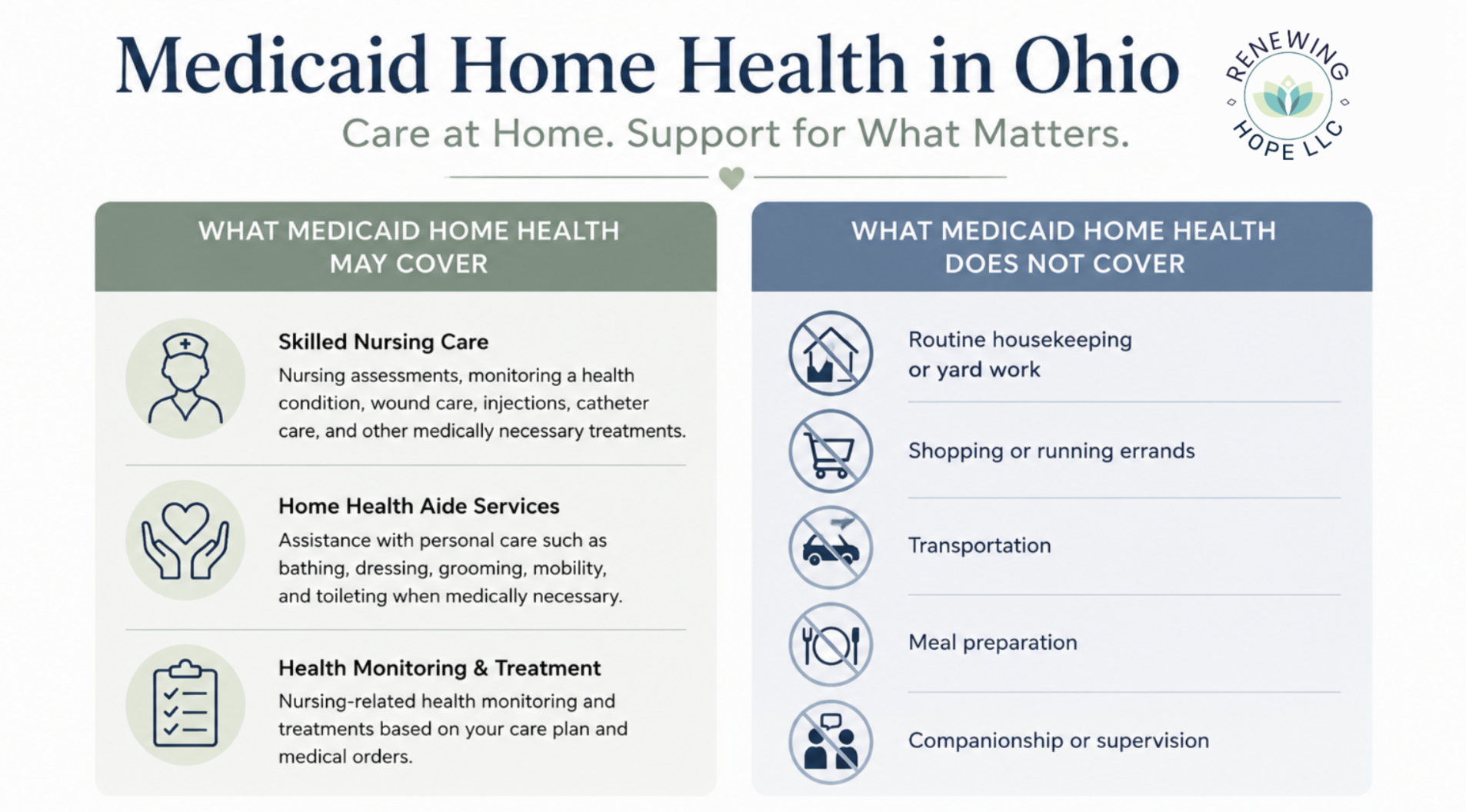
Medicaid may cover certain medically necessary home health services when program requirements are met. Depending on the individual’s needs and authorized care, this may include skilled nursing and home health aide services.
Skilled nursing involves care that needs to be provided or supervised by a licensed nurse. Someone recovering from a serious illness, managing a medical condition, or requiring certain treatments at home may need this type of support.
Home health aide services can provide additional assistance when those services are medically necessary and included in the individual’s authorized care.
Some Ohioans with more extensive needs may also qualify for home and community-based services through a Medicaid waiver or another Medicaid program. These programs can help eligible individuals receive care and support in community settings rather than institutional settings when appropriate.
The exact services available vary from person to person based on their needs and Medicaid coverage.
Is Home Health Care the Same as Help With Everyday Activities?
This is an important distinction because “home health care” can sound like it includes any type of help someone receives at home.
Someone may need assistance with bathing, dressing, preparing meals, transportation, household responsibilities, or other everyday activities. Those needs are not always considered Medicaid home health services.
Depending on the situation, assistance with daily activities may be available through another Medicaid benefit, waiver program, community organization, or support service.
This is where navigating the system can become frustrating. A family may know someone needs help but not know what that help is called or which program provides it.
Instead of trying to identify the right program on your own, start by clearly describing what the person is struggling with. A health care provider, Medicaid managed care plan, case manager, or appropriate local agency can help determine which type of service may apply.
Who Qualifies for Home Health Medicaid in Ohio?
Eligibility generally involves both Medicaid coverage and the person’s need for a particular service.
First, the individual must be enrolled in Medicaid or qualify for the Medicaid program connected to the service. Eligibility can depend on factors such as income, household circumstances, age, disability status, and the eligibility category under which someone applies.
The person may also need an assessment, medical documentation, or authorization showing that the requested home health service is medically necessary.
For example, someone recovering from a significant medical condition may need temporary skilled nursing services at home. Another person living with a disability may need longer-term support and could potentially qualify for a different Medicaid program or waiver.
If you are not currently enrolled in Medicaid, learning how to apply for Medicaid in Ohio can help you understand the application process and what information you may need to provide.
If you already have Medicaid and are trying to determine whether a specific service is covered, contacting your Medicaid managed care plan or health care provider can be a useful starting point.
How Case Management Can Help When You Need More Than Home Health Care
Health needs rarely happen in isolation.
Someone who needs home health care may also be struggling with transportation, behavioral health concerns, housing instability, food insecurity, financial stress, or difficulty coordinating several appointments and providers. A family caregiver may know additional resources are needed without knowing where to find them.
This is where case management services can be useful.
Case management does not determine whether Medicaid will approve home health care or guarantee that a particular service will be covered. Instead, a case manager can help clients identify their needs, understand available resources, communicate with providers, and connect with appropriate community services.
At Renewing Hope LLC, case management is client-centered. The client remains involved in decisions about their care while the case manager helps organize resources and address barriers that may be making everyday life more difficult.
For example, someone receiving medical care at home may also be experiencing depression or anxiety, having trouble getting to appointments, or struggling to access food or other necessities. Case management can help the client identify resources that address those additional needs.
For individuals and families in Salem, Austintown, Alliance, and surrounding Northeastern Ohio communities, having local support can make a complicated system easier to navigate.

Finding the Right Support in Northeastern Ohio
If you or a family member needs help at home, you do not need to know the name of every Medicaid program before asking questions.
Start with the needs you can identify. Is medical care needed at home? Is the person struggling with everyday activities? Are behavioral health, transportation, housing, financial, or other concerns making the situation harder?
Your health care provider, Medicaid managed care plan, or appropriate agency can help determine whether Medicaid home health services or another program may apply.
If there are challenges beyond medical care, Renewing Hope can help individuals and families explore behavioral health, case management, and community support options. You can contact Renewing Hope LLC to learn more about available services in Salem, Austintown, Alliance, and surrounding Eastern Ohio communities.
Health concerns can affect many parts of everyday life, and navigating Medicaid can add another layer of stress. Asking for help understanding your options is a practical place to begin. The right support will look different for every person, but local resources are available to help Northeastern Ohio individuals and families determine their next steps.