
DBT Therapy: What It Is and Who Benefits Most
If you’ve been searching for information about “DBT therapy”, you may be wondering how it’s different from traditional counseling and whether it’s the right approach for you or someone you care about. Many people throughout Salem, Austintown, Alliance, and surrounding Northeastern Ohio communities struggle with overwhelming emotions, difficult relationships, or behaviors that seem hard to change. Dialectical Behavior Therapy, commonly known as DBT, is a structured, evidence-based form of therapy that helps people better understand their emotions while learning practical skills to manage them. At Renewing Hope LLC, DBT techniques are incorporated into individualized treatment plans to help clients build healthier coping strategies and improve their overall quality of life.
What Is DBT Therapy?
Dialectical Behavior Therapy was originally developed to help people who experienced intense emotional distress and struggled to regulate their emotions. Over time, researchers found that DBT therapy can be beneficial for many different mental health concerns, making it one of the most widely used evidence-based therapeutic approaches today.
The word “dialectical” refers to balancing two ideas that may seem opposite but can both be true. In therapy, this often means accepting yourself as you are while also working toward meaningful change. Rather than focusing only on what is wrong, DBT encourages people to recognize their strengths while learning new skills that support healthier thoughts, emotions, and behaviors.
Unlike therapies that rely primarily on talking through problems, DBT places a strong emphasis on teaching practical skills that people can apply in everyday life. Sessions often include learning techniques to respond differently during stressful situations, improve communication, manage overwhelming emotions, and reduce impulsive reactions.
At Renewing Hope LLC, our therapists tailor treatment to each individual’s needs. While every person’s experience is different, many clients benefit from incorporating DBT strategies into their counseling journey. You can learn more about our approach by visiting our Mental Health Counseling Services page.

Who Can Benefit From DBT Therapy?
One of the biggest misconceptions about DBT therapy is that it is only designed for individuals with one specific diagnosis. In reality, the skills taught in DBT can benefit many people facing a variety of emotional and behavioral challenges.
Individuals experiencing frequent mood swings may find DBT especially helpful because it teaches ways to recognize emotional triggers before they become overwhelming. Rather than reacting immediately, clients learn how to slow down, evaluate situations more clearly, and respond in healthier ways.
People living with anxiety often describe feeling trapped by racing thoughts or intense emotional reactions. DBT therapy offers techniques that help individuals stay grounded during stressful moments instead of becoming consumed by worry.
Those struggling with depression may also benefit. Depression can make even simple daily tasks feel exhausting, while negative thought patterns often reinforce feelings of hopelessness. DBT encourages clients to develop healthier routines, improve emotional awareness, and build coping skills that support long-term recovery.
DBT is also commonly used with individuals who experience trauma, relationship difficulties, impulsive behaviors, self-destructive habits, or chronic emotional distress. Adolescents and young adults often benefit from DBT because it provides practical strategies for handling peer relationships, family conflict, school stress, and changing emotions.
Every person enters therapy with unique goals, and treatment is always personalized to meet those needs.
The Four Core Skills of DBT Therapy
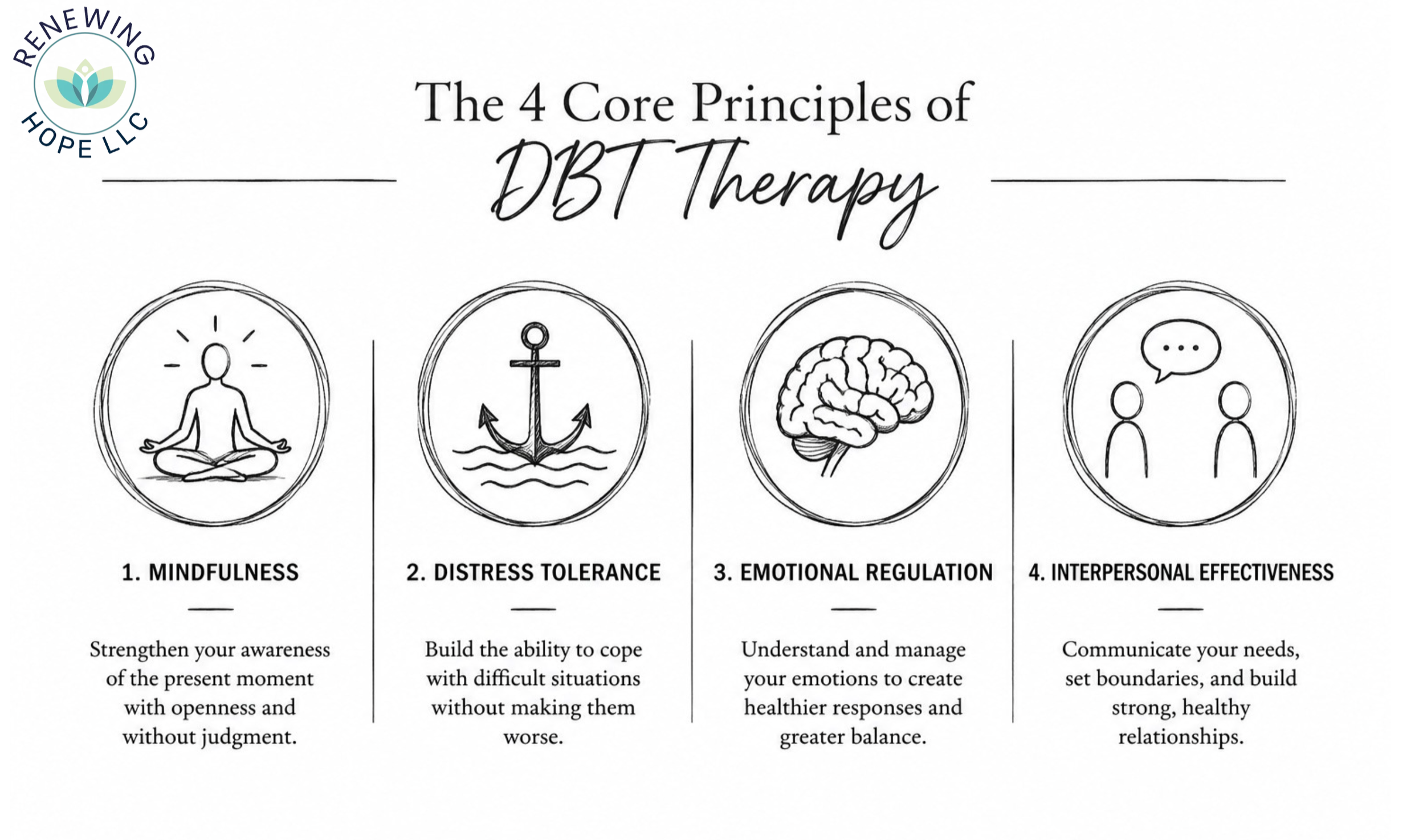
Although every treatment plan looks different, DBT therapy is generally built around four major skill areas that work together to improve emotional health.
The first area is mindfulness. Mindfulness teaches people how to become more aware of their thoughts, feelings, and surroundings without immediately reacting to them. Instead of becoming overwhelmed by emotions, clients learn how to pause and make thoughtful decisions.
The second area focuses on distress tolerance. Life inevitably brings difficult situations that cannot always be changed immediately. DBT teaches healthy ways to tolerate emotional discomfort without making the situation worse through impulsive behaviors or unhealthy coping strategies.
The third skill area is emotional regulation. Many people have never been taught how emotions work or how to manage them effectively. DBT helps clients identify emotional patterns, understand what influences those emotions, and develop healthier responses that reduce emotional intensity over time.
Finally, interpersonal effectiveness focuses on relationships. Healthy communication is essential for emotional well-being, yet many people struggle to express their needs, establish boundaries, or resolve conflict. DBT provides practical communication skills that help individuals strengthen relationships while maintaining self-respect.
These four skill areas work together to help people feel more confident navigating everyday challenges, whether those challenges involve work, family, school, or personal relationships.
What Can You Expect During DBT Therapy?
Starting therapy can feel intimidating if you don’t know what to expect. One of the reasons many people appreciate DBT therapy is that it offers structure while remaining flexible enough to address each person’s individual concerns.
During your first appointments, your therapist will spend time learning about your experiences, current challenges, personal goals, and areas where you’d like to see improvement. Together, you’ll create a treatment plan that reflects what matters most to you.
Throughout therapy, sessions often involve discussing recent situations, identifying emotional triggers, practicing new coping techniques, and exploring ways to apply those skills between appointments. Rather than simply talking about problems, DBT emphasizes learning practical tools that can be used outside the therapy office.
Progress doesn’t happen overnight. Learning new emotional skills takes time, patience, and practice. Many clients notice gradual improvements as they become more confident managing stress, communicating effectively, and responding differently during emotionally challenging situations.
The goal isn’t to eliminate difficult emotions altogether. Instead, DBT therapy helps people develop healthier ways to respond to those emotions so they have greater control over their decisions and daily lives.
Finding DBT Therapy in Northeastern Ohio
Mental health challenges are more common than many people realize, and seeking support is a sign of strength, not weakness. Whether you’re dealing with anxiety, depression, trauma, emotional overwhelm, or ongoing relationship difficulties, effective treatment is available close to home.
Renewing Hope LLC provides compassionate counseling services throughout Salem, Austintown, Alliance, and surrounding Northeastern Ohio communities. Our therapists work collaboratively with each client to identify the most appropriate treatment approaches, including DBT techniques when they fit an individual’s goals and needs.
If you’ve been wondering whether DBT therapy could help you, the first step is simply having a conversation with a qualified mental health professional. Together, you can determine the best path forward based on your unique experiences and concerns.
If you’re ready to begin counseling or would like to learn more about our services, you can contact Renewing Hope LLC to schedule an appointment. You may also find our article on What Is Therapy and How Do I Know If I Need It? helpful if you’re exploring counseling for the first time.
No matter where you are in your journey, you don’t have to navigate overwhelming emotions alone. With the right support, practical skills, and personalized care, lasting change is possible. Dialectical Behavior Therapy (DBT) is one of many tools that can help people build healthier relationships, manage difficult emotions, and move toward a more balanced and fulfilling life.